Showing posts sorted by date for query free movie download x-men. Sort by relevance Show all posts

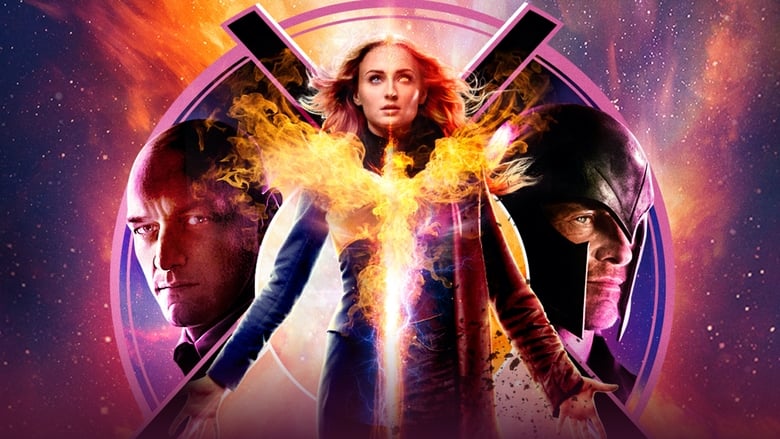
Dark Phoenix (2019) Full Movie Free

Dark Phoenix 2019

Dark Phoenix (2019)

Title : Dark Phoenix
Release : 2019-06-05
Rating : 6/10 by 3334 users
Runtime : 114 min.
Companies : The Donners' Company
Country : United States of America
Language : English
Genre : Science Fiction, Action, Adventure
Stars : James McAvoy, Michael Fassbender, Jennifer Lawrence, Nicholas Hoult, Sophie Turner, Tye Sheridan
Overview : The X-Men face their most formidable and powerful foe when one of their own, Jean Grey, starts to spiral out of control. During a rescue mission in outer space, Jean is nearly killed when she's hit by a mysterious cosmic force. Once she returns home, this force not only makes her infinitely more powerful, but far more unstable. The X-Men must now band together to save her soul and battle aliens that want to use Grey's new abilities to rule the galaxy.


Watch Online


Download HD


Dark Phoenix Official Teaser Trailer #1 2019


Watch Online


Download HD

Tag : Dark Phoenix, Dark Phoenix, Watch Dark Phoenix 2019 Full Movie Online, Dark Phoenix 2019 Full Movie Streaming Online in HD-720p Video Quality, Dark Phoenix 2019 Full Movie, Where to Download Dark Phoenix 2019 Full Movie ?, Watch Dark Phoenix Full Movie, Watch Dark Phoenix Full Movie Online, Watch Dark Phoenix Full Movie HD 1080p, Dark Phoenix 2019 Full Movie, Download Dark Phoenix 2019, Dark Phoenix 2019, mutant, telekinesis, comic book, superhero, based on comic, body possession, superhero team, 1990s, cosmic, fenix

WATCH X-Men: Apocalypse (2016) Full Movie Free

X-Men: Apocalypse 2016

X-Men: Apocalypse (2016)

Title : X-Men: Apocalypse
Release : 2016-05-18
Rating : 6.5/10 by 9221 users
Runtime : 144 min.
Companies : The Donners' Company
Country : United States of America
Language : English
Genre : Action, Adventure, Science Fiction, Fantasy
Stars : James McAvoy, Michael Fassbender, Jennifer Lawrence, Nicholas Hoult, Oscar Isaac, Rose Byrne
Overview : After the re-emergence of the world's first mutant, world-destroyer Apocalypse, the X-Men must unite to defeat his extinction level plan.


Watch Online


Download HD


X-Men: Apocalypse Official Teaser Trailer #1 2016


Watch Online


Download HD

Tag : X-Men: Apocalypse, X-Men: Apocalypse, Watch X-Men: Apocalypse 2016 Full Movie Online, X-Men: Apocalypse 2016 Full Movie Streaming Online in HD-720p Video Quality, X-Men: Apocalypse 2016 Full Movie, Where to Download X-Men: Apocalypse 2016 Full Movie ?, Watch X-Men: Apocalypse Full Movie, Watch X-Men: Apocalypse Full Movie Online, Watch X-Men: Apocalypse Full Movie HD 1080p, X-Men: Apocalypse 2016 Full Movie, Download X-Men: Apocalypse 2016, X-Men: Apocalypse 2016, mutant, superhero, based on comic, superhuman, apocalypse, super power, superhero team, world domination, aftercreditsstinger, 1980s

Download First Man EN DIRECT

Watch First Man EN DIRECT

A look at the life of the astronaut, Neil Armstrong, and the legendary space mission that led him to become the first man to walk on the Moon on July 20, 1969.


Damien Chazelle has already proven himself to be one of the freshest new directors of the decade so far. Even after delivering the hard-hitting Whiplash and the emotionally-wrecking and whimsical La La Land, he still knows how to surprise fans of his work, returning to the silver screen with grace. Combining every element of his previous outings that made him a household name, Chazelle makes sure the audience feels every ounce of power that he's thrown into his latest directorial effort. Oddly enough, it's his first foray into biopic territory, a zone where many revered filmmakers have failed to capture the reality of the moment they're attempting to bring to life.

Going in, you'll already know how the movie ends, which is the problem most directors encounter when making a biopic. Finding a way to transfer the actuality of the moment while still feeling original and never appearing boring is a hard task that very few have been able to truly accomplish. With First Man, Chazelle manages to land a spot on that list of directors, and for good reason. He keeps true to the true story with a film that's so intense and fully realized that you might forget that it actually happened.

Space movies have always been a highlight of cinema. From Georges Méliès' 1902 silent film A Trip to the Moon and Stanley Kubrick's 2001: A Space Odyssey to the Star Wars and Alien franchises, films taking place in the farthest reaches of the universe prove to be some of the most intriguing and original creations brought to viewers' eyes (even by today's standards). It's the true stories that really prove to be some of the most effective, however. Sure, fictional ones show us what could be possible; but it's the depictions of true events that show us what was possible, creating a harrowing story of patriotism in the process.

From a technical perspective, First Man is a marvel on all fronts. Linus Sandgren, the cinematographer who won an Academy Award for his work on La La Land, returns to collaborate with Chazelle and once again delivers a grand spectacle that should not be missed out on while in theaters. The cinematography is stunning. Hues of yellow and blue pop, lighting a path towards the characters and showing no sign of stopping once they've started. Certain scenes are given an extra boost from the home-video-style camerawork, beautifully grainy and shaky in all of the right ways.

Justin Hurwitz (Chazelle's roommate in college), another frequent collaborator, also returns to score the film and knocks it out of the park as expected. Hurwitz obviously knows how to write music, but its how his compositions fit in with the scenes and themes they're tied to that make them so worthwhile. Hurwitz invests you in the midst of all the chaos with all of the orchestral beauty surrounding his pieces. That's the thing about his scores, though: it's hard to objectively rank them because of how different they all are. Chazelle is a unique director because he never sticks to the same formula over an over again, and the same can be said for the accompanying music for each of them.

Acting is on point here; Ryan Gosling hits a huge emotional nerve with incredibly investing performance as Neil Armstrong. He keeps to himself (namely, his personal life) but is willing to risk it all for the mission. Nothing from Gosling is single-layered; everything is complex and detailed to the point that you might as well be in the room with him.

Claire Foy also delivers an amazing portrayal as Janet Armstrong, Neil's wife. Foy topples every housewife stereotype that embodied this specific time period, giving a strong, contained, and free-willed performance of a woman who is certainly not afraid to share her thoughts on issues concerning her husband.

The flag controversy is totally stupid. The moon landing scene doesn't need the image of Armstrong planting the flag on the moon to dish up a heavily emotional response from the audience. If you get a chance to screen it in IMAX, definitely do. The expanded aspect ratio only comes into play during this specific scene but it is utterly transfixing.

First Man is one of the best films of the year, no doubt about it. Every shot is perfection. Every sound is excellence. There is no comparison to what Damien Chazelle and co. have accomplished here; even iconic films like Apollo 13 can't live up to the new bar of quality Chazelle has set for the space drama subgenre. A harrowing journey from start-to-finish, and a true masterwork in many respects, First Man is one film that delivers upon its promise and then some. Performances and technicalities are perfect, but that's what Chazelle will continue to be known for: perfection.

A really encouraging film for a historic event. The music and silence are playing so well with each other. I am glad that the directors and actors did not waste a wonderful story. Though I always think the leading actor's appearance is significantly different from origin Neil, it does not affect the intense feelings.

Every time that someone's on a spacecraft, I was into _First Man_. It might genuinely be the first time I didn't hate scenes shot with continual use of shaky cam, which is noteworthy. But by and large _First Man_ was not for me, biopics often aren't, and _First Man_ is absolutely a biopic. It's not about NASA, or the Space Race, or landing on the moon, on astronauts, those things are present, but it's about Armstrong. I know that, because he is the only person, place or thing we get any real insight into.

_Final rating:★★½ - Had a lot that appealed to me, didn’t quite work as a whole._

**_Aesthetically laudable, emotionally vapid_**

> _I am comfortable with my level of public discourse._

- Neil Armstrong declining to be interviewed for "Armstrong's Code" (Kathy Sawyer); _The Washington Post_ (July 11, 1999)

More an intimate character drama than a grandiose examination of man's place in the cosmos, _First Man_ is far more concerned with domesticity than the actual journey to the moon, attempting to demonstrate that behind the great moments of history exist personal demons and private motivations. Nothing wrong with that of course – contextualising small character beats against a larger historical canvas can produce excellent cinema. Terrence Malick's _The Thin Red Line_ (1998), for example, uses the Battle of Guadalcanal as the background against which to engage all manner of personalised existential Heideggerian philosophical conundrums, whilst Michael Mann's _Ali_ (2001) is more interested in Ali's private struggles outside the ring than his public bouts within it. However, for this kind of storytelling to work, one thing is essential – emotional connection. The audience must, in some way, care about the people on screen, otherwise their introspective problems are more than likely to feel like they are just getting in the way of the larger story. And that is exactly what happens in _First Man_ – there is a lifelessness at the film's core, an emotional vapidity that can't be filled by exceptional technical achievements and laudable craft. The film attempts to celebrate Project Gemini and the Apollo Program, whilst also working as a character study of a man known for his emotional taciturnity. And whilst it achieves the former, the film's Neil Armstrong (Ryan Gosling) is so stoic and closed-off as to be virtually disconnected from the rest of humanity.

Based on James R. Hansen's 2005 biography, _First Man: The Life of Neil A. Armstrong_, the film begins in 1961, with the sixth of Armstrong's seven North American X-15 research flights (which actually took place in April 1962). Ascending to 207,000 ft., when Armstrong attempts to turn the aircraft back towards the landing strip at Edwards Air Force Base, a control malfunction causes him to hold the nose up for too long, and he accidentally bounces off the atmosphere, forcing him to take drastic action to land. From there, the film hits all the beats you would expect in the lead up to the Apollo 11 mission in 1969; the death of his daughter, Karen (Lucy Stafford) from a brain tumour; his acceptance into Project Gemini; his friendships with Elliot See (Patrick Fugit) and Ed White (Jason Clarke); NASA's shock at the Soviet's successes in the Space Race, particularly Alexy Leonov's EVA; Armstrong's selection as commander of Gemini 8; See's death in a Northrop T-38 Talon crash; Gemini 8's calamitous docking with the Agena Target Vehicle; the death of White, Gus Grissom (Shea Whigham), and Roger B. Chaffee (Corey Michael Smith) during a plugs-out test of Apollo 1; Armstrong's near death whilst testing the Lunar Landing Research Vehicle; his selection as commander of Apollo 11; his marriage problems with his first wife, Janet (Claire Foy); the lunar landing alongside Buzz Aldrin (Corey Stoll); Armstrong's private sojourn to the Lunar East crater; and finally, the return to Earth.

Within this framework, the film remains tied almost exclusively to Armstrong's perspective, with the occasional shift to Janet. This sets up something of a problem, as the real-life Armstrong was very much a reluctant celebrity/national hero, and despite his extraordinary accomplishments, he was not the most interesting, relatable, or easy-to-empathise-with-individual. Never one for the spotlight, when Hansen's biography was published, Armstrong was living unassumingly in a quiet Cincinnati suburb, whilst in a famous 2001 comment, when asked in an interview for the Johnson Space Center Oral History Project if he had ever gazed at the moon prior to the Apollo 11 mission, he replied, "_No, I never did that_."

With this in mind, the film sets itself the task of attempting to penetrate this most private of men, explaining why he was so singularly driven, even to the detriment of his family, to the point where not only did he plan not to tell his children he may not return from the Apollo 11 mission, he intended to leave without saying goodbye at all, until Janet changed his mind. And herein lies perhaps the film's most egregious failing. It's almost as if director Damien Chazelle (_Whiplash_; _La La Land_) and screenwriter Josh Singer (_Spotlight_; _The Post_) think the Apollo 11 mission isn't interesting enough by itself – there needs to be some kind of deeper "why" behind the whole enterprise. Armstrong can't simply be a driven individual, his heroism isn't enough, there must be some kind of psychological motivating factor.

In any case, the attempts to tease out the inner workings of Armstrong's mind don't really work, as he remains very much in his own world, impenetrable to both the other characters in the film, and the audience – no matter what Gosling, Chazelle, and Singer do to dress him up, Armstrong comes across as aloof and interiorised. Partly at fault here is Gosling's performance, with its fulcrum of emotionless stoic masculinity. This is a performance we've seen him give several times before – Henry Bean's _The Believer_ (2001), Nicholas Winding Refn's _Drive_ (2011), and, especially, Denis Villeneuve's _Blade Runner 2049_ (2017) all spring to mind - and this familiarity doesn't help matters. Instead of giving the character hidden depth, the few discernible traits he possesses make him something of a cardboard cut-out, a 21st-century screenwriter's idea of what an American man who grew up in the 40s and 50s should be (complete with retconned political correctness).

Another issue is that the filmmakers choose to locate Armstrong's primary motivation in Karen's death, which is presented with a mawkish sentimentality that, at best, fails to convince, and, at worst, actively distracts. With the lunar mission presented as much about advancing mankind as it is dealing with personal trauma, Chazelle goes to great lengths to link Karen's death with Armstrong's determination – as she is dying, he holds her and looks wistfully into the sky (indeed, whilst the real-life Armstrong attests to never gazing profoundly at the moon, the film's Armstrong never stops looking at the thing); after her funeral, he slips her bracelet into a drawer; later, he has an hallucinatory vision of her playing with other children; and on the moon's surface, he drops the bracelet into the Lunar East crater and cries a few tears for her. At one point, Janet reveals that Armstrong never mentioned Karen after the funeral, and that's a believable, and deeply emotional, detail. The problem lies in the overkill surrounding it, detracting from whatever genuine emotion such details should evoke. Every time we see Gosling stare yearningly into the sky, the potency of the film is diluted just a little bit more.

A big question in all of this, of course, is whether Armstrong really dropped the bracelet into the crater, had a vision of his daughter, and shed a few manly tears, or is this Hollywood romanticising history? The answer is, we don't know. During his interviews with Armstrong and Janet for the biography, Hansen formulated the theory that maybe Neil left something for Karen on the surface. However, when Hansen asked Armstrong if he could see the manifest for the mission, Armstrong told him he had lost it, something which would have been highly out of character for such a fastidious record-keeper. In fact, he hadn't lost it, he had donated it to the Purdue University Archives, but it is under seal until 2020. However, when Hansen asked Armstrong's sister June if it was possible he had left something of Karen's, she said that it was. So, the fact is we don't know what Armstrong did when he wandered over to the crater (his sojourn there was literally the only part of the landing that wasn't by-the-book). However, for me, the whole thing comes across as far too syrupy, an amateur psychological profiling of a man who was intensely private. Personally, I would have much preferred the Lunar East trip to remain a mystery – by showing us what they think might have happened, Hansen, Singer, and Chazelle cheapen the intensely personal nature of the moment, which Armstrong obviously chose to keep secret for a reason.

A good example of the film's attempts to shoehorn everything into a writer's conception of the story concerns Armstrong's training on the MASTIF (Multiple Axis Space Test Inertia Facility). The film shows him passing out, before coming to, and asking to go again. This pays off later when the Gemini 8-Agena docking goes wrong, and Armstrong experiences the same forces as he did in the MASTIF. However, because of his experience, he remains conscious, and is able to retrieve the situation. Except Armstrong never trained on the MASTIF. The device was abandoned after Project Mercury as NASA felt it was unrealistic, and didn't prepare the pilots for anything they would ever experience in reality. It's one of the ironies of NASA history that the man who experienced what the MASTIF simulated never trained on the machine itself. The problem here is that the real story (Armstrong's sheer force of will helps him overcome the odds) is infinitely better than the invented one (Armstrong's training helped him overcome the odds), which is indicative of a larger problem – the film always seems like someone's idea of what happened.

Aesthetically, Chazelle wastes absolutely no time in letting us know that this is Armstrong's film, with the excellent opening sequence taking place primarily from his POV. However, the scene also introduces the first example of Chazelle's pungent romanticism. As the shaking of Armstrong's X-15 momentarily stops, and the noise dies away, a majestic sense of calm descends. However, rather than trust the audience to extract their own interpretation of the moment, Chazelle can't resist a BCU of Gosling's eyes, with the curvature of the earth reflecting on his visor. On the other hand, a well-handled aspect of this technique is that because the film adheres so rigidly to Armstrong's perspective, very little of what he himself can't see is shown. So, for example, instead of depicting the vast infinite expanses of space, Chazelle keeps the audience tucked tightly inside the _Eagle_ landing module (at least up to the point of the descent to Tranquility Base).

Indeed, make no mistake, the lunar landing itself is beyond spectacular, with the incredible score by Justin Hurwitz and the superb cinematography of Linus Sandgren (_American Hustle_; _Joy_) coming into their own. The sequence was shot in 70mm IMAX, and it makes extraordinary use of the larger frame, with the first panorama of the lunar surface as awe-inspiring as anything in Stanley Kubrick's _2001: A Space Odyssey_ (1968) or Terrence Malick's _The Tree of Life_ (2011). An especially well-directed part of the lunar descent is that rather than lay down a busy foley track, Chazelle pulls out the sound out altogether, creating an eerie, otherworldly moment that literally gave me goosebumps.

Thematically, as with all three of Chazelle's previous films, the clash between the domestic and the professional is front-and-centre. _Guy and Madeline on a Park Bench_ (2009), _Whiplash_ (2014), and _La La Land_ (2016) all focus on artists who sacrifice emotional relationships so as to reach an artistic peak – they are all stories of men whose passionate devotion to their work and pursuit of perfection alienates the women in their lives. In this sense, _First Man_ very much fits Chazelle's _oeuvre_, he seems as obsessed with how men attempt to balance work and home-life as is Michael Mann. Armstrong is not an artist, of course, but he is a perfectionist, and the pursuit of his craft does make the woman who loves him unhappy. To this end, Chazelle utilises various methods, such as having NASA radio chatter play over scenes of Jan at home alone. The film's ending is also extremely low-key and private, stripping away the finery of the Apollo mission, and leaving us instead with two people attempting to re-connect.

However, despite the magisterial last 30 minutes, and some sporadically well-handled moments, _First Man_ is underwhelming, and, for long portions, interminably dull. As good as that final sequence is, it's no compensation for the plodding and lifeless two hours that precede it. And overall, the film isn't a patch on Philip Kaufman's _The Right Stuff_.

Download Kingsman: The Secret Service FULL HD 1080p

Download Kingsman: The Secret Service EN DIRECT

The story of a super-secret spy organization that recruits an unrefined but promising street kid into the agency's ultra-competitive training program just as a global threat emerges from a twisted tech genius.


One of the most interesting movies to watch. Humor, action and adventure well plotted into this great movie. The action is just great.

A nice surprise.

I was not expecting anything from this movie but it turned to be a really funny one, borrowing from all the other spy's movies around.

Collin Firth is a great choose and you can say the same for most of the cast, remarking also Samuel L. Jackson.

An easy movie for a brainless evening.

The kinetic super-spy caper ‘Kingsman: The Secret Service’ will serve as a boisterous blueprint for those teen fanboys out there that will fancy an elaborate overload of James Bond-esque high-powered hedonism. It certainly does not hurt that the high-wire hysteria as showcased in the twitchy ‘Kingman’ is based upon the acclaimed comicbook series by Mark Millar and Dave Gibbons. Also, add into the mix the movie-making overdrive pedigree of director Matthew Vaughn (‘Kick-Ass’, ‘X-Men: First Class’) and slick, cheeky spy-spry send-ups that recall the over-the-top espionage genre and its exaggerated suspense-driven foundation. Well, ‘Kingsman: The Secret Service’ is a cockeyed, pulsating parody that works its ultra-violent magic for the Austin Powers crowd that wants to walk on the high-octane wild side of Bond’s universe.

Sure, ‘Kingsman: The Secret Service’ has its iffy moments where the blatant sexist overtones, magnified violent sequences and a generous bloody bounce of excess will have some stomping their feet in sheer indignation. The apparent knock on ‘Kingsman’ will be its robust ridiculousness and familiarity in Vaughn’s ‘Kick-Ass’ cartoonish vibe. However, the same elements that may cause some reservations with the film’s low-brow lunacy is also the same ingredients that trigger ‘Kingsman: The Secret Service’s carousing charm in majestic mayhem.

The grand gimmick behind behind kick-starting ‘Kingsman’s go-for-broke rollicking is casting the sophisticated presence of the Oscar-winning Colin Firth (‘The King’s Speech’) as dapper Harry Hart (aka ‘Galahad’), a polished and prominent superspy for a British secret intelligence society. Hart’s top-secret spy network is headed up by Arthur (Oscar-winner Michael Caine). The secretive operation is based out of a notable tailor’s shop known as Kingsman. Also worth noting is that all the secret service agents are named after the famed knights of King Arthur’s Round Table. Go figure. In any event, the suave Harry Hart is the debonair face of the spy organisation and will play a critical part in both recruiting a young up-and-coming agent with decent physical skills and tracking down a worldwide menace bent of destroying the planet. It is all in a day’s work for the skilled, well-dressed licensed-to-kill operative.

Hart, who had been loyally connected to a fallen colleague from a past mission gone disastrous years before, decides to become a mentor for his late co-worker’s troubled son Gary ‘Eggsy’ Unwin (played by newcomer Taron Egerton) whose law-breaking conduct catches the attention of the police. Feeling a sense of responsibility for his deceased spy buddy’s wayward kid, Hart takes Eggsy under his wings and determines to shape the misguided youngster into resilient Kingman stock. After all, Eggsy has the needed physicality (we are told he is an exceptional gymnast) and roguish spunk to join the ranks of the seemingly understaffed spy outfit. Soon, Eggy and other recruits will be grilled through rigorous training from Kingman member Merlin (Mark Strong) as they look to fill the spot vacated recently from the dead Lancelot.

The dearly departed Lancelot, it turns out, was the latest victim of ruthless criminal mastermind Valentine (Samuel L. Jackson). The flashy Valentine, a billionaire gone bonkers, hopes to control the world’s climate change. He is known as a mega-wealthy entrepreneur and philanthropist but his sinister heart yearns for some heavy-handed dastardly deeds that puts him on the immediate radar for Hart and his crafty Kingsmen to spring into action. At the demented Valentine’s side is the deliciously disabled exotic henchwoman Gazelle (Sophia Boutella) with the treacherous knack for disarming her adversaries with blazing blades.

The bombastic and eye-pleasing ‘Kingsman: The Secret Service’ sets out to have one goal in mind: to highlight its thunderous homage to spygate spectacles that salute everything from the Agent 007 flicks and related free-wheeling 60’s fare such as the ‘Matt Helm’ and ‘Derek Flint’ spy franchises to the recent espionage vehicles that invite the millennium-based harried heroes such as the Jason Bournes and Jack Ryans of the world into the frenetic fold. It is fast, furious and unapologetic in its rambunctious spirit as a ricocheting romp.

Vaughn, in all his rousing Tarantino-esque tactics, unleashes a visceral assault that is visually wrapped in his escapist package of an adrenaline rush. Wisely, Vaughn incorporates some of his ‘Kick-Ass’ colourful calisthenics to arm his playful spy yarn. As the veteran spygame squires, both Firth and Caine are game for the frolic they signed up to participate in with puckish aplomb. Jackson brings his usual explosive badass persona to the table as the villainous fashion plate Valentine. The 14 year-old males will draw their adventurous inspiration from Egerton’s junior spy Eggsy Unwin. Some may become nostalgic when uncovering the likes of spotting ‘Star Wars’ icon Mark Hamill as an imperiled climate changer scientist caught in the crazy clutches of Jackson’s diabolical antagonist.

Although not the most inventive take on ridiculing the spy genre with over-extended finesse and sensationalism, ‘Kingsman: The Secret Service’ is still a preferred jolting distraction at the beginning of an early stillborn movie season.

Kingman: The Secret Service (2015)

20th Century Fox

1 hr. 40 min.

Starring: Colin Firth, Taron Egerton, Michael Caine, Samuel L. Jackson, Mark Strong and Sophia Boutella

Directed by: Matthew Vaughn

MPAA Rating: R

Genre: Spy Thriller/Action & Adventure/Fantasy & Action

'Kingsman: The Secret Service' is a comedy film that satirises spy movies such as the James Bond franchise. Gary 'Eggsy' Unwin (played by Taron Egerton) is a normal working class 18 year old from London who gets recruited into a super secret spy organisation. Humour comes as he tries to mix with these posh and suave upper-class stereotypes.

Matthew Vaughn has included his typical ultra stylised violence ('Kick Ass') and it does boast a good sound track. There are a lot of nods to films such as Quentin Tarantino's 'Pulp Fiction' but it just reminds me of examples when things have been done much better. The highlight of the film for me was a scene in which Colin Firth violently massacres a crazy church to the music of Lynyrd Skynyrd ('Free Bird') whilst almost seeming like a continuous long shot.

The screenplay is very unoriginal and the dialogue with the young actors in particular is cringe-worthy. Tarantino type set-pieces just come across as annoying as the film fails to have any cleverness or creativity.

Apart from Colin Firth every actor is either average or just really bad. Samuel L. Jackson, in particular, is worse than usual as he tries to add some freshness to his regular spiel by trying to affect an annoying and distracting speech impediment.

'Kingsman' is going to appeal to the intended target age group as it does contain scenes of fantasy violence depicted as "cool" whilst characters swear. It would also help your enjoyment of the film if you have not seen the many, many examples where each scene had been conducted much better.

★★½

If you like old-fashioned James Bond style movies you probably like this one. It is a bit more outrageous and has a few more overly silly moments than the old Bond movies but on the whole this is a very fun and enjoyable secret agent movie.

Gary is, via a few twists and turns at the beginning of the movie, recruited by a secret agent employed by a super secret private organisation with remarkable resources. Their agents looks and behaves like London upper class gentlemen but have remarkable fighting skills. The initial scenes when Gary is recruited are just great.

Gary is then submitted to a rather gruesome training schedule and at the same time the main plot plays out in parallell. Of course the two threads merge towards the classical showdown with the megalomaniacal evil mastermind in the end where, naturally, Gary gets to save the world.

The movie has all the “goodies” of a secret agent movie. British gentlemen agents, action, secret agent “stuff” like shops that are not what they look like, hidden entrances into secret bases, rooms that are actually elevators and of course gadgets, lots of gadget to help our heroes thwart the evil mastermind’s nefarious plans. Of course said mastermind have a personal henchman a la Oddjob to do the more grisly parts of his evil biddings. I quite liked this rather unique henchman, or rather henchwoman, and her odd weapons. More so than the main villain which I found a bit bland at times.

On the whole I enjoyed this movie a lot. However, there are some silly parts which drags it down a bit. I especially disliked the colorful exploding heads towards the end of the movie. That just felt like the producer/director was smoking some funny stuff when making those scenes. There were a few other scenes which I felt was going too much towards silly comedies as well. Without those I would probably have added a star.

All things said this was well spent 130 minutes as far as I am concerned.

Download X-Men: Days of Future Past EN DIRECT

Watch X-Men: Days of Future Past FULL HD 1080p

The ultimate X-Men ensemble fights a war for the survival of the species across two time periods as they join forces with their younger selves in an epic battle that must change the past – to save our future.


**Year of release** 2014 **Directed by** Bryan Singer **Written by** Simon Kinberg **Starring** Hugh Jackman James McAvoy Michael Fassbender Jennifer Lawrence Peter Dinklage Ellen Page

**X-Men: Days of Future Past** (rating: 4 ++)

**Plot** - In a dystopian future of 2023 where mutant-kind has been all but wiped out by powerful robots known as Sentinels the last surviving mutants launch one final attempt to save their species from extinction. Hiding out in a monastery in China, Kitty Pryde (Page) sends Wolverine's (Jackman) consciousness back in time to 1973. His task is to prevent Mystique (Lawrence) from murdering the Sentinels' creator Bolivar Trask (Dinklage). His murder made him a martyr and ensured that his destructive creation went into production. In addition, Mystique is captured in the process and her DNA used to engineer even more powerful machines. By stopping the murder the hope is that they will change the future and save their species. Seeking out the young Charles Xavier (McAvoy) Wolverine is despondent to find that he is not the man he will come to know decades later. With Xavier a broken man, Wolverine's first challenge is to help him find his old strength. The next challenge isn't one that sits all that well with Xavier; they must break Magneto (Fassbender) out of a prison cell beneath the Pentagon. To do so they enlist the aid of Quicksilver (Evan Peters), a mutant with superhuman speed. With Magneto and Xavier once again standing side-by-side they head to Paris to attempt to stop Trask's murder at Mystique's hands, but will they make it in time?

In a fitting move considering the storyline of this film allow me to go back in time to the year 2000 where I can still remember going to see the first X-Men film in August of that year. Hard as it may be to believe, the big superhero film was not the guaranteed box office success they are nowadays. Following the disastrous reception that met 1997's Batman & Robin the superhero genre was on life support, and another big failure could have seen the plug pulled. Thankfully for all us fanboys out there the film proved to be both a critical and commercial success, kicking off a surge in comic book films which has seen them come to dominate the box-office. Well somehow 14 years have passed since then (and I can't quite believe that :eek:) and we now have the 7th film in the X-Men franchise. Now since the solid start of X-Men the series hasn't exactly been the most reliable in terms of quality and has been rather overshadowed by the Batman's, Spider-Man's, Iron Man's and Avengers' of this world. In truth you could probably split the previous 6 films evenly into 'the good' and 'the not so good'; though to be fair to The Wolverine which I'd put in the latter category it's pretty decent. Well as the 7th film in the series this was always set to break the tie and the good news is that it has swung the pendulum very much towards the positive side of things.

That said however I didn't find that I was quite as high on the film as many other people seem to be. As seems to be the case for just about every other superhero film these days, the release of DoFP has seen many people instantly jump on the bandwagon of proclaiming this the best superhero film ever. While I certainly wouldn't go that far this is an extremely entertaining entry into the X-Men franchise, and one that continues the upswing of First Class. The film does open in absolutely thrilling fashion and ends quite strongly as well. In between these wonderful bursts of action though I just found that the film had a tendency to fall into a lull on a couple of occasions. With its complicated story the film has to spend a lot of time trying to keep things clear for the audience, which sadly results in the situation and the stakes being reiterated time and time again. It just threatens to get bogged down by becoming overly talky, derailing the momentum and in general I didn't feel it was as well paced as Captain America: The Winter Soldier for example. An additional action sequence or two I don't think would have gone amiss. I also feel that it perhaps lacked the colour, energy and sense of fun of X-Men: First Class. Some of that comes from the fact that I didn't feel DoFP embraced its period setting to the degree that First Class did which on more than one occasion felt like a Sean Connery Bond film. A few snazzy outfits and some brief touches upon the Vietnam War aside I don't think it really exploited the 70s era to the fullest. And I think the Vietnam sequence was actually amongst the film's weaker moments; an unnecessary detour which could easily have been left on cutting room floor.

As I mentioned, the opening sequence of DoFP is a terrific way to kick the film off; in fact I think its got to be one of the best opening gambits of any superhero film. The film instantly drops us right into the middle of a Sentinel attack upon the X-Men in the future; making for an absolutely thrilling opening. It's a wonderfully creative sequence that features some genius choreography as the hitherto unknown Blink (played by Fan Bingbing), with her ability to create teleportation portals, emerges as one of the most visually dazzling mutants we've seen so far throughout the series. It's a terrific set-piece that the film arguably never matches for the next two hours, at least in terms of action and excitement; there is a sequence however that is fantastically entertaining which we'll get to later. The big finale then aims to be and mostly achieves feeling like a suitably epic affair that encapsulates Sentinels, the White House and the RFK sports stadium. At the same time the film is also jumping back and forth between this and the future where the Sentinels have once again launched an assault upon the X-Men. The only problem, and one that is in complete contrast to other superhero films such as Man of Steel, is that I didn't feel its concluding battle was quite long enough. The two competing sequences feel like they are slightly lacking in action and drama, and are over too soon.

**Film Trivia Snippets** - In reference to the X-Men member Kitty Pryde, and her importance to this particular film, DoFP was shot under the working title of “Hello Kitty.” /// Days of Future Past is based on a storyline of the same name that appeared across two issues of Uncanny X-Men in 1981, and was written by Chris Claremont. It is now the fourth film to be based on a story penned by legendary X-Men writer Claremont. X2 was adapted from 'God Loves, Man Kills'; X-Men: The Last Stand was based on his 'Dark Phoenix Saga'; and The Wolverine was based on his comic of the same name. In the comic the future world was set in the year 2013, the same year in which filming for the movie version began. /// The bullet wounds that appear on Wolverine's chest on his arrival to the 1970s is in the form of the Big Dipper. This is an homage to the 1980s anime series, Fist of the North Star, whose protagonist Kenshiro has the same scar pattern on his chest. /// Prior to making the film, Bryan Singer had a two-hour discussion with James Cameron abut how to make a time-travel concept feasible and workable within the film. Thanks to Cameron's experience as the director of The Terminator and Terminator 2 the two discussed concepts including alternate universes and string theory (a field of quantum physics that define multiple universes). /// It's quite clear just by looking at the credits that this is one hell of a cast that's been assembled. If you're looking for more proof however then how about this; the four main female X-Men in the principal cast (Halle Berry, Jennifer Lawrence, Ellen Page and Anna Paquin) are all Academy Award nominess, while the six principle male cast members (Hugh Jackman, Michael Fassbender, James McAvoy, Ian McKellen, Patrick Stewart and Peter Dinklage) are all Golden Globe nominees.

With such a prestigious cast at Bryan Singer's disposal it's no surprise to find that performances across the board are generally of a high standard. Though the sizeable cast means that not everyone gets an equal chance to shine; Halle Berry's involvement for example is little more than a cameo. In fact I'm struggling to think if she even had a single line throughout the whole film or if all she did was make it rain a little bit. And the whole future ensemble are almost completely sidelined, meaning that the established regulars are given little to do other than spout some exposition, while the various new additions (Bishop, Blink, Warpath, Sunspot etc) are given absolutely no introduction whatsoever so we have little reason to care about them or mourn their demise. In fact for the majority of them I'm not even sure there names are known until we get to the closing credits. The lack of exposure given to the future timeline was certainly a disappointment. As a result it's in the past where the most noteable performances come from with solid efforts coming from Lawrence, Fassbender, Jackman etc. However the one individual who is able to stand out from the crowd for me would have to be James McAvoy who I thought was just excellent as the young Charles Xavier. The fact that he is given the strongest characterisation and the most to work with certainly helps. We initially find him as this supremely broken individual who is in great pain both physically and emotionally, but with help from Wolverine he is able to find his way back onto his path.

The two most notable additions to the X-Men world this time out were Evan Peters' Quicksilver and Peter Dinklage's Bolivar Trask. And as it turns out the end result for both was completely flipped from what many were predicting beforehand. The promo images for Quicksilver had fanboys already sharpening their knives before the film had even hit cinemas, ready to tear into him with the kind of fervour reserved for Batsuit nipples and Ben Affleck. And yes I have to say that his appearance still comes across as rather bizarre and stupid, kind of like Julian Assange as styled by Lady Gaga. As a character however he kind of kicks ass, his introduction arguably being the coolest addition to the franchise since Alan Cumming's Nightcrawler back in X2. And just like Nightcrawler had with his incursion into the White House, Quicksilver is given the spotlight all to himself at one point to really make a name for himself. This time it's a break-out from the Pentagon where his incredible speed comes into its own with a terrifically fun and inventive set-piece that allows him to steal the film from his more illustrious co-stars before sadly disappearing shortly afterwards. The way he is just written out is rather disappointing and feels like it's only been done to help free up space for everyone else. It does however leave the audience wanting more, so it's good news that he's going to be starring in X-Men: Apocalypse. My only concern about the character is whether they've actually made him too powerful. They show his abilities as being so strong that you imagine he could destroy any mutants, even the likes of Magneto and Xavier, before they even had the chance to respond.

The real disappointment amongst the cast is Dinklage's Trask. Now Dinklage is a great actor, no doubt about that, and I think he personally does good work here. It's just that the character he is lumbered with here I felt was a little bit dull to be honest (particularly for the film's supposed 'big bad'), giving him very little to really sink his teeth into. That also creates one of the film's few main flaws in my eyes; the lack of a strong villain. Trask kind of takes the place of Senator Kelly from the first X-Men film, but that film also had Magneto and his Brotherhood of Mutants as villains. While the future X-Men do face off against the considerable threat of the Sentinels they are a fairly blank entity devoid of an actual character or personality that can interact with the X-Men. Which is not to say they are not effective foils for our mutant heroes, you just get the feeling that there should be big bad in charge of deploying and controlling those machines. In terms of design the Sentinels may disappoint and likely anger the real X-Men fanboys out there, baring little resemblance to their comic book counterparts. In fact they aren't a million miles away from The Destroyer as seen in the first Thor film. However I don't think there's any denying that they most certainly do make an impact; in fact they are rather chilling, unsettling creations. The fact that the X-Men suffer some very violent, nasty deaths certainly heightens that feeling.

**Film Trivia Snippets** - Bryan Singer talked about "changing history" in an interview with Empire Magazine(May 2014). The director stated "I don't want people to panic about us erasing the movies. I believe in multiverses," explaining the possibility of certain events as they would be part of the history of alternate universes. /// In the "Days of Future Past" comic it was Shadowcat (Kitty Pryde) who went back in time; in the film it's Wolverine. According to writer Simon Kinberg, Kitty was intended to be the time-traveller but it didn't work out: "Kitty in the era of young Magneto and Xavier, would have been negative 20 years old. The reflex response to that was a character who doesn't age. Wolverine is the only character who would look the same in 1973 as he does in the future." Thus, Wolverine was picked for being an ageless immortal character who would bridge past and future. /// To create the sensation of Quicksilver's incredible speed ability Bryan Singer filmed his scenes in a special format of 3600 frames per second. This means that Quicksilver will be moving 150 times faster than normal. /// Josh Helman was originally going to be cast as a young Cain Marko/Juggernaut. But Juggernaut was written out of the film, and Helman was offered the role of a young William Styker. /// Bryan Singer based Bolivar Trask on Adolg Hitler; “As Hitler used the Jews as a scapegoat to bond the darker parts of Europe, he's doing the same thing with mutants. But he wasn't a six foot, perfect blond Aryan - he was a short, funny looking fellow!”

Now considering the fairly dense and complicated storyline that encompasses two timelines and what feels like dozens of characters I think that the film's writer, Simon Kinberg, actually does a fairly commendable job of keeping everything in some kind of balance and managing to just about ensure that it all makes some kind of sense. And considering the twisted mess of continuity that he has had to deal with it would perhaps be unfair to poke holes at it. But hey these are films for comic book fanboys, what do you expect but for us to nitpick! :D The film is still unable to address a few niggling questions, perhaps because that continuity mess makes it almost impossible to actually do so. However questions still linger such as how exactly is Charles Xavier still alive after being killed off in X-Men: The Last Stand? What's the deal with Wolverine's claws and their constant shifting back and forth between adamantium and bone? Still no explanation as to why Xavier and Mystique didn't appear to know each other in the original trilogy, but were so incredibly close according to these films etc. The script has to spend so much time just trying to establish the story that there is little chance to focus on the actual characters at its heart. As someone who loved the Magneto-Xavier relationship and interaction in First Class that's a shame. And it feels like there is barely a single line of dialogue in the whole film that isn't exposition

The script also fails to address a few new issues, just completely glossing over them perhaps in the hopes that we just won't notice. For example when and how exactly did Ellen Page's Kitty Pryde get the ability to send people's consciousness through time? And perhaps it's just me but the whole plot point (and it's a very important one) about Mystique's blood being so vital in the development of the Sentinels seems rather vague and questionable in its logic. If they were going to go down that route I feel Rogue would have been a somewhat more logical choice given that her ability is to replicate the powers of other mutants, not just change her physical appearance. It kind of came across as them just trying to shoehorn Mystique into being as important as possible to the film, largely inspired you suspect by the meteoric rise of Jennifer Lawrence since First Class. In fact with Hugh Jackman getting on in years, and his days as Wolverine coming to an end, the search is on to perhaps try and find the new face of the franchise. With Channing Tatum set to take on the character of Gambit he seems like a decent bet to take over that mantle. However with Days of Future Past they certainly seem to be positioning Jennifer Lawrence as another possibility to take on the role if she were to extend her current deal. I doubt anyone would ever have predicted Mystique being pushed to the fore in such fashion. Oh and just as another little nit-pick; was I the only one who thought the make-up job for Mystique looked rather s*itty this time out? I think it looks a lot more fake now than it ever did even 14 years ago.

Just a few more thoughts to wrap up. After the fresh start that was First Class, bringing Wolverine back and once again making him a central figure feels like a little bit of a step back. While he's only had two official solo films this almost films like the 6th Wolverine-focused film we've now had in the series. And if you're going to bring him back I think you should at least use him correctly. His strongest feature for me is as a brutal, kick-ass warrior, but DoFP actually gives him surprisingly little opportunity to unsheathe those iconic claws of his, placing him more in the role of a diplomat trying to keep the peace between Magneto and Xavier. The fact that the film kills so many of the mutants introduced in First Class offscreen I found quite disappointing. And the use of Blink's portals aside I didn't think the film quite captured the same team dynamic that was present in First Class, with several of the team going off on solo missions or taking their enemies out all by themselves. And now a couple of other little things that I liked. While we get to see very little of it the wasteland that the Earth has become in the future dystopia is a very effective and stirring touch, and one that evokes the future war as seen in the Terminator films. Oh and one little touch that I really loved was the film recreating newreel footage of the decade to match actual footage from the era. It comes off looking like the Zapruder JFK film.

Amongst fans of superhero films, 2008 is seen as a bit of a holy grail for the genre; the release of both The Dark Knight and Iron Man, two of the most acclaimed and loved entries so far, gaining it that reputation. 2014 has so far seen the release of two great efforts (The Winter Soldier and Days of Future Past); if Guardians of the Galaxy lives up to the promise of its trailers then we could have a new contender for that title of comic book movie's holy grail year.

**Conclusion** - I know I've been pointing out a lot of flaws with the film in this review (perhaps as a response to all the gushing over it) but the truth is I did still find it to be an extremely entertaining addition to the X-Men series. As a result of some of those flaws however I'm not quite as high on it as many other people seem to be. For the moment I would have it in 2nd place amongst 2014's superhero flicks behind the excellent Captain America: The Winter Soldier, and after one viewing it would slot into 3rd place amongst the X-Men films.

One thing I should definitely add however is my condition when watching it. As I have been for a great deal of time recently I wasn't feeling particularly great when I went to watch it; feeling rather run-down and a bit yuck. So that perhaps hindered my enjoyment slightly,meaning there's a chance that score could rise on a repeat viewing.


**Bonus Film Trivia** - Patrick Stewart and Ian McKellen were performing in a touring production of "Waiting for Godot" when Bryan Singer approached the actors about reprising their respective roles as Professor X and Magneto. According to McKellen, both men were utterly shocked as they thought they'd passed their roles on to James McAvoy and Michael Fassbender, and would never play the characters again. Both Stewart and McKellen were delighted to return to two of their most popular roles, and to work with the younger actors playing the same characters as well. /// When Matthew Vaughn was going to direct, he was going to make the film a direct sequel to X-Men First Class and have it set in the 1970s. Early ideas included an opening with the Kennedy assassination being caused by Magneto, and mutant encounters set in the Civil rights movement/the Vietnam War. When Singer took over, he integrated these concepts into a viral marketing campaign to set up the action of the film. In this alternate history, Magneto is arrested and imprisoned for the assassination of Kennedy, but maintains his innocence. The "Bent Bullet" Theory (a reference to the real life "Magic Bullet" Theory criticized by conspiracy theorists) holds that the Warren Commission determined that Magneto manipulated Lee Harvey Osawld's bullets to kill the President in retribution for the murder of the mutants Azazel and Tempest by the CIA. Conspiracy theorists, based on Magneto's testimony, insist however that Magneto had tried to prevent the murder of Kennedy, and that the true shooter was not Oswald, but Mystique in disguise who, with the help of Emma Frost framed Magneto, and manipulated Jack Ruby into later murdering Oswald. The theory also posits that Mystique offered to double as Kennedy in an attempt to grab power, all of which backfired horribly, leading to anti-mutant hostilities.

Not as good as the previous X-Men movies but it has a pass... Jennifer Lawrence doesn't even get close to Rebecca Romijn. Also, Michael Fassbender and James McAvoy are really far from their senior characters performed by Ian McKellen and Patrick Stewart but the rest of original cast from first 2000's movie are great, as always.

This is a good and very enjoyable movie which, to me, was a bit surprising since I generally find that time travel is akin to sticking your foot in some messy and smelly stuff. It almost always screws up the movie in some way or another. This one was not without its faults but it did survive becoming too screwed up by it.

The opening scenes are indeed somewhat impressive throwing the viewer directly into an apocalyptic future where mutants as well as human are rounded up by sentinels. I could not help but think about Terminator during these scenes. Maybe not very original from a general point of view but the dark and gloomy opening was not the opening scenes I would have expected from an X-Men movie.

Then we, unfortunately, dive straight into some time travel when they send Wolverine back to 1973. This is of course a opportunity to make yet another twist of the mutant scare, mutants hunt, a good mutant is a dead mutant etc. story that we have seen in so many movies now. The main adversary changes but the general story idea stays the same and the arguments for hunting down the mutants are as silly as ever. Quite frankly, I find that angle a wee bit overdone and boring by now.

Luckily the story is fairly well implemented. The scene were Wolverine wakes up and disposes of the three thugs are rather funny. Pretty standard stuff but pretty funny nevertheless. The part where they retrieve Magneto is quite nice and the scene down in the Pentagon where the guards and everything else is “frozen” while Maximoff calmly walks around and rearranges things is outright hilarious.

I quite disliked the cheap twist where Magneto just decided to go amok and screw things up just when they were about to retrieve Mystique though. They could have spent some time coming up with a better way to twist the story at that time. The idiotic stuff with Wolverine getting a fit at the same time was just adding to my annoyance with that scene. This part is the main reason I will not give this movie a top score.

Apart from this scene the movie is a very well done superhero movie with lots of nice special effects. Sure it is also rather predictable but most people, including myself, do watch these movies mostly for the effects after all. As long as the plot is not downright stupid it get to pass.

Time travel. Okay, I have to harp a bit about time travel. I do not like it in movies because there are too many things that just does not add up. In this movie it is not too bad and most of the time the actual time travel aspect is kept out of the action. Wolverine goes back in time, does his stuff with a lot of action, and saves the day. Sure the dialog often comes back to the “I’m from the future” aspect but not much more. One thing annoys the hell out me though. Wolverine affects a lot of events while he is back there but not a single things seems to change in the future until one single event passes at the end of the movie. Then everything changes and it is happy ending. That is the kind of nonsense that time travel in movies ends up with.

Bottom line is that this is a very enjoyable movie. Without the rubbish plot twist in the middle it would have gotten 9 or 10 stars.

ok..i like all the x-mens except the last one. Logan. That was horrible. a 8 out of 10 for this

***Focuses on the best characters and an interesting story***

"X-Men: Days of Future Past" (2014) starts in an apocalyptic near-future where mutants are being wiped out by Sentinels, government-made robots created for this very purpose. The X-Men and Magneto decide to send Wolverine's consciousness back to his body in 1973 to prevent the Sentinels from attaining their mutant-killing powers.

This is easily one of the best X-Men films because of the interesting plot and the focus on the most interesting characters. Wolverine (Hugh Jackman) has been the top X-Men since day one so you can't go wrong with making him the focal point. James McAvoy and Patrick Stewart are excellent as Professor X, as are Michael Fassbender as young Magneto, Jennifer Lawrence as Mystique and Evan Peters as Quicksilver, the latter in a small but highly entertaining role. Nicholas Hoult as Beast gets an honorable mention and Bingbing Fan is notable as Blink, particularly her stunning face.

The plot is convoluted and yet easy to follow if you're familiar with the franchise's story arc. The film is all-around compelling. It has the confidence to slow down and be pensive while throwing in the requisite thrills and not forgetting to be entertaining. For instance, the creative and amusing way Quicksilver takes down a bunch of security guards at the Pentagon, which is one of the movie's top scenes. Lastly, I like the way Magneto’s great power is illustrated (you’ll see what I mean).

The film runs 2 hours, 11 minutes and was shot in Québec, Canada.

GRADE: A

Download Django Unchained FULL HD 1080p

Download Django Unchained FULL HD 1080p

With the help of a German bounty hunter, a freed slave sets out to rescue his wife from a brutal Mississippi plantation owner.


America, mid-nineteenth century, just prior to the Civil War. Winter. Two horsebacked slave-traders are leading half-a-dozen manacled negro slaves through a large, unspecified section of Texas. As they move one night through a wood, they cross paths with an affable, charming German fellow identified by the hokey model tooth affixed atop his carriage by a spring as a travelling dentist. He greets the traders cordially but he's struggling to be understood; not because English is his second language (although he deferentially concedes as much when instructed - more than once - to "Speak English!") but because his vocabulary is far wider than that of the simpler men here before him. It's not a chance passing, either; this German fellow, who identifies himself as Dr. King Schultz (played by Christoph Waltz with the same smiling, deadly menace that earned him an Oscar statue for his part as Col. Hans Landa in Inglourious Basterds) is looking for these traders. More specifically, their inventory of negro slaves. Even more specifically, one of those slaves in particular. Django (Jamie Foxx, Collateral, Ray). Attempting to buy Django, Schultz is met with short, suspicious shrift and ordered at gunpoint to be on his way. Within a second, one trader lies dead and the other lies incapacitated underneath the bulk of his dead horse. Schultz unchains Django, instructs Django to take the dead fellow's horse and coat, and pays the remaining trader for all that he's taken. He then tosses the manacle key to the other slaves and posits two choices to them, as he sees it: Carry their injured master thirty-plus miles to the nearest town for medical assistance, or unchain themselves, blow the injured slave-trader's head off with the gun Shultz has left them, bury the corpses and use the Pole Star to run for the Northern states, where slavery had been abolished, and for more than fifty years in some areas. Funnily enough, they take up the latter option.

So begins Django Unchained, an oater set in the slave states of the Deep South and the latest rollercoaster by Gen-X movieland wunderkind Quentin Tarantino. Always clearly a man heavily informed by the grindhouse subgenre of the Spaghetti Western, he's finally made one himself, and if Quentin's your thing it's a blast, though I doubt it'll convert many Tarantino sceptics; in fact it'll almost certainly reinforce those things that people dislike about him, about which more later.

It transpires that Dr. Schultz ISN'T a dentist ("I haven't practised dentistry in five years," he confides to Django over a beer) but a bounty hunter, and a lethal one at that. He's chasing down the Brittles, a murderous gang of brothers currently plying their trades as plantation overseers. He doesn't know what they look like but he knows they were recently employed at the Carrucan plantation, which is why he was searching for Django - a slave recently sold by that very plantation - in the first place; Django can point them out for him. Schultz is no fan of the South's backwards-thinking propensity for slavery though, and he offers Django a deal: help Schultz find and kill the Brittle Brothers, Schultz will treat Django like a free man, pay him $75 (a decent little wedge in 1858) and rubber-stamp his freedom. Along the way, he'll also teach Django a thing or two about the art of gunfighting and about the macabre trade of bounty-hunting (both in which Django proves to be a natural). On the trail of the Brittles, Schultz wonders aloud as to Django's plans once this endeavour is over and he's free. Well, as it happens, Django is a married man and his intention, once free, is to find his wife and buy her freedom. They'd tried to run from the Carrucan plantation together but they'd been caught, branded (both Django and his wife - played with all of her nerves exposed by Kerry Washington - sport R-For-Runaway scars on their cheeks) and sold on, separately. So he doesn't know where she is but that's what he's going to try to do. Schultz, feeling responsible for Django as the man granting him his freedom, proposes a further deal: If this Brittle bounty goes well, he'll honour Django's freedom but if Django stays with him through the winter as partners, taking on bounties and earning money, he'll help Django locate his wife.

What we have here is a large sequence of set-pieces - some funny, some tense, some action-packed - stretched across very-nearly three hours (though, like most QT films, it moves like a bullet train and those three hours just fly) strung together by a fairly simple revenge/rescue tale set against a geographically sprawling backdrop; a reasonably similar template to many of Quentin's movies and an almost identical template to that of previous outing Inglourious Basterds, to which Django Unchained could almost be considered a companion piece despite the wildly different global and historical settings. Like Inglourious Basterds, Django Unchained is quite a bit longer than the story need be, and like Inglourious Basterds that is because each scene is treated by Tarantino as a mini movie, a contained set-piece all of its own. Every scene is fleshed out and deepened for either heightened comic or dramatic effect by lengthened sequences of characters going about the mundane or by characters delivering enormous monologues - rambling shaggy-dog stories, usually - to one another, for context. Not every scene is entirely necessary, either. I wouldn't call that a flaw though, I'd call it a trait typical of Quentin Tarantino; whether it's a flaw or an outright treat depends entirely on whether that's an element of Tarantino's writing that the viewer appreciates. Personally, I love Tarantino's writer's voice and I could watch these scenes for hours (indeed, I watched Django Unchained three times over the course of yesterday), but I can fully undersand what those lamenting the decent 90-minute film that's lost somewhere within the sojourns and speeches of Django Unchained are saying.

Performances throughout are utterly mesmerising, from stars Foxx and Waltz but also - in fact, maybe more so - from principle antagonists Leonardo DiCaprio as "Monsieur" Calvin Candie, the horrifying owner of the "Candyland" plantation currently holding the ownership deeds on Django's wife, and Samuel L. Jackson in an if-anything even more monstrous role as Stephen, Candie's elderly head house slave, a man who has utterly abndoned the culture and torment of his people in return for a few material trappings as the slave-in-chief. Playing to superb comedic effect is Don Johnson as Big Daddy, a strutting, peacock-like Tennessee dandy and owner of the plantation currently employing the Brittle Brothers, and delightful in cameo roles are (among many others) James Remar (The Warriors, Dexter), Jonah Hill (Superbad, The Watch), John Jarratt (Wolf Creek, Rogue) and Michael Parks (Red State, Kill Bill). Quentin himself makes a cameo as usual and, as usual, he's not as charming as he probably thinks he is, but he's also not as bad as many think he is, either. There's even a quick cameo (raising an involuntary cheer from me!) by Franco Nero, the original Django from the magnificent 1966 film of the same name by Sergio Corbucci (that's not the only nod back to the first Django movie; the opening credits to Django Unchained are presented in exactly the same way as the original, and the theme song to Quentin's film comes directly from the Corbucci film too).

Django Unchained is likely to come under fire on a couple of counts; possibly for it's incredible levels of bloodshed (one particular gunfight is the most blood-splattered scene I've seen in a movie since those elevator doors opened in The Shining), and much more probably for the liberal use of what guilty white folks like to refer to as "The 'N'-word", uttered literally hundreds of times from first scene to last. However, neither criticism is warranted in my humble opinion. The bloodshed is of the overexaggerated cartoon quality. Heads, arteries and extremities explode upon bullet impact like detonated watermelons to a gloopy, "BLAAAPP!" sound effect, the blood itself translucent, syrupy and intentionally unrealistic. And if a tale is set against the backdrop of slavery in the 19th century deep South, you're going to hear the word "Nigger" in that tale. Often. Be assured though that just as Inglourious Basterds was a revenge fantasy of the downtrodden Jewish war refugees over the stupidly evil Nazi Germans, this is a tale of empowerment of the enslaved black man over his sadistic, pig-ignorant white overseers.

If you like Tarantino, you'll probably like Django Unchained. If you like Westerns (and the blood-drenched Spaghetti Westerns of the late sixties in particular), you'll probably like Django Unchained. If, like me, you're an admirer of both Tarantino AND westerns, this is a no-brainer. Get and see it, it's a blast.

I'd like to have seen him pull a Gatling gun out of a coffin, though.

A highly entertaining yet disturbing film with superb cast and performances for an audience who would likely never consider watching a film fundamentally about slavery, where Tarantino is masterfully and emphatically navigating and exposing the complex layers of the violent and dehumanizing system of slavery.

**ENTERTAINING from start to finish !!**

Given I am a big fan of **Quentin's** works i knew this movie would be a treat to watch.But what i didn't know was violence can be so **COOL**... The movie is a treat to watch(including the blood and gore) from starting to end.The acting is superb.And the cinematography is just too good! The whole cast played their parts to perfection...Especially **Samuel L. Jackson** and **Jamie Foxx**..**Leo and Christopher Waltz** were superb too..And as Christopher said in the movie - "It was hard to RESIST".A must watch for everyone who likes QUALITY cinema..Even the ones who cant stand BOOMs and BANGs, you wouldn't regret spending about 3 hours watching this well written, well directed and well acted GREAT movie !!

This is one of the best movies I have watched in a long time. It is a pure Tarantino blast. The somewhat unexpected and quite hilarious start of the movie catches your attention from the start and from then on it is 3 hours (almost) of pure enjoyment.

The main actors are playing their roles very well. The Dr. King Schultz character (Christop Walz) is incredibly funny without being ridiculous, Jamie Foxx is excellent as Django and Leonardo DiCaprio is doing his role well as a plantation owner and slave trader. None of the rest of the crew stood out as particularly bad. Well with the possible exception of Tarantino himself then when he made his usual in-movie appearance a’ la Hitchcock. Not that he was particularly bad but he is no actor either.

The movie starts of by Dr. Schulz liberating Django and proceeding to a small town showing Django what he is in the business of doing. Those first minutes of the movie are somewhat unexpected and very funny to watch. After that the movie gets more serious as Django gets to learn to be a bounty hunter and finally gets on with his quest to rescue his “Damsel in distress”. It still has quite a bit of “Tarantino humour” sprinkled around in it though.

During the movie we are treated to a long series of stereotypical people with, let us say, an “attitude” towards African people. It is tempting to say “nigger haters” but that would not be true since a lot of these people did not exactly hate them. They just did not consider African people to be people but more than live stock for them to use as they wished. Unlike a lot of movies portraying these events this one never comes across as boringly finger pointing or overly morally lecturing. Nor does it in any way support or glorify the way things were at this time. It is a movie made to entertain set in a period where bad shit happened and using it for the story. Nothing more and nothing less.

As usual with a Tarantino movie there are some violent parts, some more violent parts and some bloody violent parts in it. The ending fights are a glorious show of destruction and blood splatter. I am sure some people are complaining about the “unnecessary violence”. I am not one of those people. Without these parts it would not be a real Tarantino movie. As always it is made with the usual exaggeration that Tarantino is so good and which reminds you that it is “only a movie”.
This is one of the few movies that I have given 10 out of 10 stars in a very long time. I enjoyed it immensely.

When Django is unchained (pronounced JANG-oh, not Duh-JANG-oh)

Released in 2012 and directed & written by Quentin Tarantino, "Django Unchained" stars Christoph Waltz as an ex-dentist who befriends an ex-slave, Django (Jamie Foxx) in West Texas a couple of years before the Civil War; they team-up as bounty hunters once they realize how good they jell. The second half focuses on their attempt to infiltrate a Mississippi plantation owned by pompous Southerner "Monsieur" Candie (Leonardo DiCaprio) in order to rescue Django's wife (Kerry Washington). Samuel L. Jackson plays Candie's overly loyal house slave.

This is an excellent American Western with Spaghetti Western elements featuring Tarantino's typical artistic flourishes. It takes place in the West AND in the South, which is reminiscent of the underrated "Nevada Smith" (1966), one of my favorite Westerns. Waltz is magnetic as the nonchalant protagonist and he & Foxx have good chemistry. There's a nice mix of interesting dialogues, amusing moments and over-the-top action. Unfortunately, but to be expected, Tarantino goes overboard with the 'n' word and the blood-letting, the latter to the point of cartoonish-ness.

Nevertheless, this is an original Western that is vibrant with creativity, including stunning locations, cinematography and a great amalgamated soundtrack/score, which includes cuts by Ennio Morricone, like the excellent "Hornets' Nest," the imaginative "The Braying Mule" and the moving "Ancora Qui." It's all-around superior to "The Hateful Eight" (2015) because it's not limited by a one-room whodunit plot (although "Hateful" has its unique points of interest).

The movie runs 165 minutes and was shot in Jackson Hole, Wyoming; Evergreen Plantation & New Orleans, Louisiana; and several locations in California (Lone Pine, Alabama Hills, Semi Valley, Melody Ranch, Santa Clarita, Independence & Los Angeles). The cast includes numerous peripheral notables, e.g. Ato Essandohs, Don Stroud, James Remar, Bruce Dern, Ato Essandoh, Franco Nero, Don Johnson, Amber Tamblyn and several others.

GRADE: A

Watch The Lighthouse FULL HD 1080p

Download The Lighthouse FULL HD 1080p

Two lighthouse keepers try to maintain their sanity while living on a remote and mysterious New England island in the 1890s.


If you enjoy reading my Spoiler-Free reviews, please follow my blog @
https://www.msbreviews.com

I love weird movies. The seemingly awkward moments, the apparently nonsensical ambiguity, or simply the pure WTF sequences... All of these leave me deeply captivated by what the story and its filmmaker are trying to transmit to their viewers. The Lighthouse is the most recent addition to the group of psychological horror films that will make you think, "what the hell am I watching?" Nevertheless, this is one of the most accessible "weird flicks" since most of the story is easily explainable.

Therefore, I hope this Robert Eggers' movie gets a successful home release. Usually, the general public heavily dislikes ambiguous films. Nowadays, people want everything at the palm of their hands before they even watch the movie (aka trailers). So, a film about two lighthouse keepers who go crazy, where dozens of scenes apparently make no sense (they do), can fail to catch the viewers' attention. However, it found mine. Filmed in black-and-white and with a 1.19:1 aspect ratio (almost squared), Eggers delivers a gorgeous-looking piece of cinema.

People tend to (wrongly) associate the use of black-and-white with "old movies," but it's really just another color palette. For example, Blade Runner 2049 and Mad Max: Fury Road use the color yellow in such a beautiful, eyegasmic way. Color can affect us emotionally, psychologically, and even physically, often without us becoming aware. The Lighthouse's black-and-white establishes the film's mood from the very beginning. A very somber, sad, dark environment, filled with creepy seagulls, and brutal weather conditions.

If I try to imagine the movie with color, it's not going to be very different from what it actually is. There's no sun, only tons of rain, wind, and waves. It's always cloudy, and inside the house, it's still dark and cold. So, even if Eggers decided to film with color, black, grey, and white would be the predominant tones either way. That's why the decision to make this film in black-and-white is so perfect. Every shot is dripping with visual beauty. Amazing wide shots of Robert Pattinson working like a slave, getting hit by the relentless weather, all accompanied by a haunting score which elevates every sequence.

In my point of view, it's a story about how solitude can make anyone run away from reality. Lack of human contact never contributes to a good way of living. Imagining a better life or literally run away to a remote place with a non-stop job to make you forget who you are or what you did, are not going to help anyone overcome what is, in fact, a personal issue. It's a narrative given to many interpretations, so no one is right or wrong. Depending on our life experience and on our distinct personalities, each and every one of us can have a different perspective and understanding of what this movie tells through the Eggers brothers' brilliant screenplay.

One thing is certain: Robert Pattinson and especially Willem Dafoe should be considered for the awards season. However, this film is too weird and ominous to be awarded any nominations, unfortunately. Dafoe is 64-years-old, and he crawls on the muddy ground, he gets hit with rain and literal sh*t in the face, besides delivering a versatile performance. Both he and Pattinson offer a dynamic range of acting, going from absurdly hilarious to intensely dramatic displays. It's probably Pattinson's best performance to date, but Dafoe shines as a crazy old ex-sailor.

Their accents are perfect, and Dafoe's ability to "sing" complex (linguistically speaking) sea poems for whole uncut takes is worthy of every single Oscar. That's something I wasn't expecting: there's a lot of long takes that become even more impressive due to the actors' undeniable talent. It's been a long time since I had to read subtitles to actually understand what the characters were saying, especially Dafoe. Besides the strong accents, the dialogues are extraordinarily intricate and wordy, which definitely captures my attention since I have to be twice as focused.

Incredible cinematography, great editing, and a subtle but powerful score. It's a shame if people ignore this movie's existence. It's not getting released in my country, so I'll try my best to make people see it. Unfortunately, it's being ignored by every major award ceremony, which is pretty unfair, having in mind it's one of the best films of 2019. I don't have a single issue with it. Some people might not enjoy its ambiguity or its slow pacing. Still, I genuinely love how everything falls into place, culminating in a shocking, suspenseful, and tense third act that makes the massive build-up worthy of merit.

All in all, The Lighthouse is one of my favorite movies of 2019. It's definitely going into my Top10, and way up there. Filmed in beautiful black-and-white with a claustrophobic aspect ratio, Robert Eggers delivers a story about loneliness and isolation that takes the weirdest, craziest route. It's one of those WTF films that will leave everyone thinking about it. I love its ambiguity, even if most of its story is pretty accessible. Packed with suspense and tension, mostly due to the excellent cinematography and the brilliant decision to use black-and-white to set the dark, cold environment. Robert Pattinson delivers his career-best performance, but Willem Dafoe steals the spotlight with an Oscar-worthy crazy display that will be ignored due to the known genre bias. It's tear-inducing hilarious at times, but powerfully dramatic as well. I have not a single complaint, and I love it more the more I think about it. Please, watch this at home if you get a chance. Don't miss it!

Rating: A+

“𝐾𝑒𝑒𝑝𝑖𝑛 𝑠𝑒𝑐𝑟𝑒𝑡𝑠, 𝑎𝑟𝑒 𝑦𝑒?”

Time to spill the beans…’The Lighthouse’ is a masterpiece! I loved loved loved loved it! I loved every minute of it. One of my favorite movies of 2019 and I honestly don’t think anything can top it. A slow descent into madness that creeps into your subconscious and won’t be leaving anytime soon.

From the very first frame, I immediately knew this was going to be special. I was hooked throughout until the end credits.

Willem Dafoe and Robert Pattinson both deliver career defining performances. They play off each others insanity beautifully. I could tell just from the accents and dialect that plenty of homework went into making an authentic portrayal of the time.

Robert Pattinson is fantastic as a quiet and private lighthouse keeper that witness the madness slowly unfolding, but also feeds the audiences curiosity on revealing the strange happenings on the island. Pattinson is a chameleon when it comes to portraying characters.

Willem Dafoe, on the other hand, was mesmerizing as the old sea dog captain with a love for farting. His long and insane monologues are the main highlights, because it was so electrifying to watch it was hard not be captivated. He’s strict and often unpredictable, but once you see it, you won’t forget it.

I hope Robert Eggers continues making horror movies in the future, because right now he’s one of the best living directors working today. The slow-burn tension and lack of conventional scares seems to be his trademark so far. Every choice he made was so carefully thought out and the results is masterful. According to Eggers, they actually built a lighthouse from scratch and everything we see, including the weather, is genuine. Even if some tricky was used, it was so seamless I couldn’t tell what was fake.

I loved how the movie was shot; the dim black-and-white with the claustrophobic aspect ratio, giving it the appearance of a silent film born like a German expressionism - something you would’ve mistaken for a 1920/30’s horror folklore. Perfectly captures the time period and the overall dread. You really do feel cut off from the outside world and abandoned on this spectral-like island, and this black sheet of cloud strongly looming over the two men. A dark force in all directions, unseen but very eerie. The cold and heartless weather is a character itself. A big bully with salty intentions.

I adored the use of lighting through out, as the only light source is either natural light during daytime or candle lit lanterns, which cast many shadows that adds to the unease. There’s some gorgeous looking cinematography on display here. Seriously, even as am writing this right now I can memorize every single frame of this strange nightmare of a film. Absolutely breathtaking.

While the movie is mainly horror, but there is comedy sprinkled throughout that was actually pretty hilarious. Everything from Dafoe farting and some creative insults the characters would often spit at each other, which would later expand into long monologues that I sat back and watch in awe with a stupid grin on my face, because how something so silly can be so poetic. Never have I seen a movie that perfectly balances more than one genre so fluently. You can laugh at the moments where it’s suppose to be funny, but also take it seriously whenever it’s suppose to be taken seriously, which is sometimes all in one scene. The writing from Eggers is so excellent.

After only one viewing there was a lot I could easily dissect in terms of interpretation. There's masculinity and Greek mythology imagery that demonstrates a striking sense of power. There’s also a certain idea of sexuality being a sacred thing and the frustration it may bring. Or maybe it’s just a simple story about two guys on a rock getting drunk and then getting even drunker while holding each other until they drift off to sleep.

Overall rating: One of the best looking horror comedies of 2019.

I was worried that my enormously high expectations for 'The Lighthouse' would set me up for inevitable disappointment, but to my relief and awe, it somehow exceeded them. This is an extraordinary, baffling, hypnotic, maddening, hilarious, disturbing, disorienting, arousing, absolute mindfuck of a film, drenched in mud and sweat and salt and booze and shit and semen and piss and blood, primal screams of rage and terror, the laughter of madmen and the sobs of the damned, the cry of seabirds and the roar of the sea and the cataclysm of gods and men at war. It haunts you long after it is over, swills in your mind like an aged whisky, and in the days since seeing it, I can't tell you how desperately I want to dive back in again. After delivering arguably the greatest horror film so far this century, Robert Eggers has created another insane American masterpiece, the kind of film dreams and nightmares are made of. It was worth every single second of the wait.
- Daniel Lammin

Read Daniel's full article...
https://www.maketheswitch.com.au/article/review-the-lighthouse-robert-eggers-delivers-another-staggering-american-classic

_**A superbly made film about madness, isolation, alcohol, a pissed off one-eyed seagull, and farts**_

>_But, as we near'd the lonely Isle;_

>_And look'd up at the naked height;_

>_And saw the lighthouse towering white,_

>_With blinded lantern, that all night_

>_Had never shot a spark_

>_Of comfort through the dark,_

>_So ghastly in the cold sunlight_

>_It seem'd, that we were struck the while_

>_With wonder all too dread for words._

- Wilfrid Wilson Gibson; "Flannan Isle" (1912)

> _Lighthouses are endlessly suggestive signifiers of both human isolation and our_ _ultimate connectedness to each other._

- Virginia Woolf; _To the Lighthouse_ (1927)

> _The isolation spins its mysterious cocoon, focusing the mind on one place, one time, one rhythm – the turning of the light. The island knows no other human voices, no other footprints. On the Offshore Lights you can live any story you want to tell yourself, and no one will say you're wrong: not the seagulls, not the prisms, not the wind._

- M.L. Stedman; _The Light Between Oceans_ (2012)

A manic fever dream fusing Greek mythology, Jungian psychology, and German Expressionism with Herman Melville and H.P. Lovecraft, by way of George Kuchar, Mike Kuchar, and Guy Maddin, _The Lighthouse_ is about isolation, insanity, competitive masculinity, alcoholism, and farting. The second film from writer/director Robert Eggers, who exploded onto the scene with the masterful _The VVitch: A New England Folktale_ (2015), _The Lighthouse_ was co-written with his brother, Max Eggers, and is very loosely based on the "Smalls Lighthouse Tragedy" (1801), in which one of the two assigned keepers died, and it was over four months before relief could be sent. By the time someone did land, the still-living keeper had been driven completely insane. A bizarre film in just about every way, from its glorious visual and aural design to its grandiose acting to its jet black humour to its wonderful ambiguity to its avenging angels/seagulls, if you thought _The VVitch_ was somewhat inaccessible, then you'll most likely despise every second of _The Lighthouse_, insofar as its subtlety, slow pace, and narrative abstruseness will surely frustrate those who prefer their horror in the mould of jump-scares and chainsaw-wielding escaped mental patients. However, if you favour the cerebral, difficult-to-define, and always slightly off-camera terror that was the foundational principal of _The VVitch_ and films such as Daniel Myrick and Eduardo Sánchez's _The Blair Witch Project_ (1999), Jennifer Kent's _The Babadook_ (2014), and Emma Tammi's _The Wind_ (2018), or if you enjoy the oppressive dread of classic German Expressionist films such as Robert Wiene's _Das Cabinet des Dr. Caligari_ (1920), Fritz Lang's _Der müde Tod: ein deutsches volkslied in 6 versen_ (1921), and F.W. Murnau's _Nosferatu, eine Symphonie des Grauens_ (1922), then you'll find much here to appreciate.

In the late 1890s, Ephraim Winslow (Robert Pattinson) and Thomas Wake (Willem Dafoe) arrive on an outcropping off the coast of New England to begin their four-week rotation manning the lighthouse. Bombastic, spirited, and flatulent, Wake is a veteran – a former sailor who's been a wickie for the last fifteen years. Withdrawn and taciturn, Winslow is new to the job, having previously worked as a logger in Canada. Wake assigns Winslow the menial tasks – cleaning the floors, emptying the chamber pots, carrying kerosene containers, repairing the exteriors, oiling the gears in the basement – whilst he himself attends to the Fresnel lens, telling Winslow that he is never, ever to approach it, and not to concern himself with its maintenance. And so things go for a while. However, soon enough, Winslow begins to have strange experiences – a one-eyed seagull starts pestering him; he has visions of a mermaid washing up on the shore; he thinks he sees Wake standing in front of the light, completely naked; he has dreams of erotic tentacles; he has a vision of Wake as a barnacle-encrusted titan; he imagines wading out into the water amidst hundreds of logs, which close over top of him and drown him. Although he's unnerved, the four weeks pass without too much incident, but on the night before their relief is due, the wind suddenly changes, and the island is hit by a violent storm. The following morning, their ferry doesn't arrive, and with no way of contacting the mainland, the duo attempt to pass the time attending to their duties, whilst their drinking becomes ever more excessive, their loathing of one another ever more pronounced, and their hold on sanity ever more tenuous.

The first thing that jumps out at you in _The Lighthouse_ is the aesthetic. _The VVitch_ was a good-looking movie, no doubt, but _The Lighthouse_ is a rarefied masterclass in visual and aural design. Opening with the old monochrome Universal logo, the importance of Damian Volpe's incredible sound design is indicated immediately, as before we see anything, we hear the wind blowing and a foghorn rumbling in the distance. That horn is omnipresent throughout the film, and to say it gets under your skin is an understatement. You know the siren from the _Silent Hill_ games that sounds right before the town transitions from the Real World to the Otherworld? Well, imagine that sound bellowing out every minute or so for an entire film. It's unsettling, it's disturbing, and it makes it impossible to ever really acclimate yourself to this strange _milieu_. There's only one sequence in which we don't hear the foghorn, the pivotal opening scene of the third act, and the silence is oppressive – it's one of those instances where you don't realise how loud something was until it suddenly goes quiet and you're left with a ringing in your ears.

The sound design is matched by the stunning monochrome visuals. Working with cinematographer Jarin Blaschke, who also photographed _The VVitch_, Eggers shot _The Lighthouse_ on 35mm black & white Eastman Double-X 5222 celluloid in the relatively unheard format of 1.19:1. Usually, if a filmmaker shoots in a non-widescreen format, they use Academy ratio (1.37:1), as seen in films such as David Lowery's _A Ghost Story_ (2017), Paul Schrader's _First Reformed_ (2017), and Jennifer Kent's _The Nightingale_ (2018). On the other hand, the use of 1.19:1 (sometimes called Movietone) is extremely rare, especially in modern films, and for good reason – it was a transitional format that was only used briefly during the shift from silent cinema to sound (1926-1932). And that is exactly why Eggers and Blaschke chose it. Yes, they do match form to content insofar as the nearly square format traps the characters within the frame to an even greater degree than 1.37:1 would have, thus enhancing the already oppressive claustrophobia of the lighthouse itself. But where the genius in choosing this format really comes to light is when one considers to what the film aspires. This is a folktale, a fable from a by-gone age, so what better way to present that fable than by replicating the way the film would have looked had it been made during the early years of sound filmmaking? At the same time, although shot with modern cameras, Blaschke used period-specific Baltar lenses and an off-cyan filter custom-made by Schneider Filters to more accurately emulate the look of late 19th-century photography. Taken together, the black & white images, the square frame, the lens design, the patina, and the haunting sound design all work in glorious tandem to create the sense that the film is a disturbing artefact, an antique vestige from a different era, into whose very DNA dread has burrowed.

One also has to praise Craig Lathrop's production design. The lighthouse used in the film wasn't an existing structure, but was custom-built to scale on Cape Forchu, an outcropping off the coast of Nova Scotia. However, you'd never know it. Most of the interiors were shot on soundstages, but all exteriors were shot on Forchu. And Lathrop has imbued every inch of the building, both inside and out, with an existentialist dread – from the industrial hell of the gears in the basement to the almost Eden like peace of the lantern room high above, from the cramped and crude bedroom to the squalid kitchen. Malevolence stalks every nook and cranny.

Eggers also does something interesting with the narrative itself. I've seen some critics refer to Winslow and Wake as unreliable narrators, and whilst such critics are on the right track, to call the characters narrators is, in strict narratological terms, inaccurate. Both characters are, in fact, focalisers, to use the term coined by Gérard Genette – the world is filtered entirely through their perspective, but they don't narrate. Indeed, although we shift from one character to the other, meaning there is a narrative presence at the extradigetic level, Eggers never leaves their perspective, nor does he present any kind of omniscient or overt heterodiegetic narration; we're imprisoned within their perspective for the duration of the film. Also important here is the use of what Seymour Chatman refers to as "fallible focalisation" (he actually uses the term "fallible filtration", but filtration and focalisation are the same thing). The story is one of madness, and it's abundantly clear from early on that neither man is a reliable witness, so everything filtered through their perspective (i.e. the whole film) could be tainted or unreliable (which is why critics erroneously refer to the duo as unreliable narrators). As things begin to fall apart, this sense becomes ever more prevalent – for example, in an important scene near the end, we see Wake do something, and in the next scene, when Winslow confronts him about it, a confused Wake points out it was actually Winslow who did it. Is Wake lying? Is Winslow projecting his own actions onto his companion? Who exactly is misleading who here? And if there's madness in this tale, where does it land – Winslow, Wake, the audience, or all three of us? It's a wonderful use of a defamiliarising technique which works to keep the audience constantly on edge and constantly second-guessing everything they see insofar as we know that some, none, or all of it could be the figment of a failing mind.

The dialogue is also beautifully written. Whereas in _The VVitch_, Eggers used pre-colonial Early Modern English lifted from court transcripts of actual witch trials, here he doesn't take the dialogue from anywhere specifically, but there's an obvious debt to writers such as Sarah Orne Jewett, who often wrote about whalers working off the southern Maine coast. Winslow's accent is based on a Maine farming dialect, while Wake's is based on that of Atlantic fishermen, and although their idiolects are more recognisable to our modern ears than those used in _The VVitch_, inflections and sentence structure ensure we never forget this is a tale of the past – for example, Wake declares, "_I'm a wickie, and a wickie I is_" and during an argument about his cooking, he asks Winslow, "_Ye is fond of me lobster ain't ye?_" And needless to say, the acting is immense, with both men turning in career-best work. Whilst Pattinson slowly morphs from a docile and subservient worker into something more assertive, aggressive, and altogether more sinister, Dafoe goes as big as he can, in a performance that wouldn't be out of place in classic German Expressionism.

The film's storyline is slight enough as to suggest several themes without really going too heavily into any of them. For example, one could certainly read Winslow and Wake's relationship as homoerotic, maybe a study of the suppression of desire. Paranoia is also never far from the surface, nor is the societal construct of masculinity, particularly as manifested in competitiveness, with Eggers mocking male bravado and posturing. Another reading would be that the film is an allegory for class struggle _á la_ J.G. Ballard's _High Rise_ (1975) – the lighthouse represents society; the lantern room high above is the upper class, with Wake doggedly protecting the room, literally locking Winslow out; meanwhile, the bowels of the lighthouse is the working class, with Winslow spending much of the film performing menial tasks assigned him by Wake. Alcoholism is also omnipresent – from Wake telling Winslow that "_boredom makes men into villains_", and that alcohol is the only medicine for it, to the duo progressively drinking more and more each night, until they run out of rum, and so try to mix turpentine and honey, so dependent have they become on the numbing effects of drink.

_The Lighthouse_ definitely isn't for everyone. It's challenging and rewarding in equal measure, but it does ask much of the audience, with meaning to be found between the lines, rather than within them. Eggers does some of the legwork, but he still leaves the audience with a distance to go. Personally, I loved every crazy minute of it – whether it be the rising sense of dread, the unrelenting tension, the oppressive suspense, the fierce battle of wills, the consuming paranoia, the descent into insanity etc. There's a lot that has gone into making this film what it is, both in terms of crafting the folkloric story and in the more mechanical sense of putting the finished film together – it's an aesthetic marvel in pretty much every way. Thick with mood and atmosphere, _The Lighthouse_ proves that _The VVitch_ was no fluke.
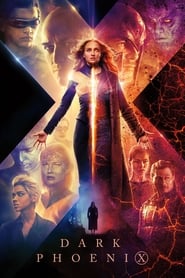
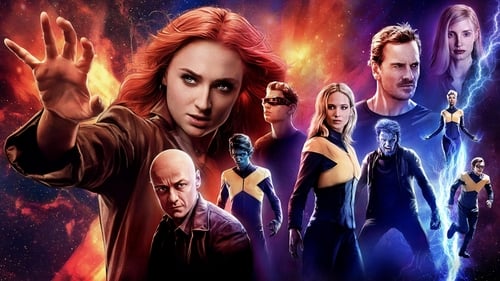
Featured Movies

Cinemaplix21 © 2014